Constipation: Causes, Symptoms & Natural Ways to Support Healthy Digestion
Constipation is a common problem that affects the way the body digests food.
It happens when bowel movements are not frequent enough or are difficult and painful to pass. This condition can affect people of all ages and may happen occasionally or become a regular issue. While mild cases are usually temporary, long-term constipation can cause discomfort and affect the overall health of the digestive system.
At Orovita7, we focus on promoting healthy eating habits and using scientifically supported wellness solutions to help people maintain a healthy digestive system in a safe and responsible way.
Understanding Constipation
Constipation is usually defined as having fewer than three bowel movements in a week or passing hard, dry stools that are hard to pass.
It often happens when the colon takes too much water from the waste, making the stool firm and slow-moving through the digestive tract.
Although constipation is often linked to lifestyle choices, it can sometimes be a sign of an underlying issue with the digestive system.
Common Causes and Risk Factors
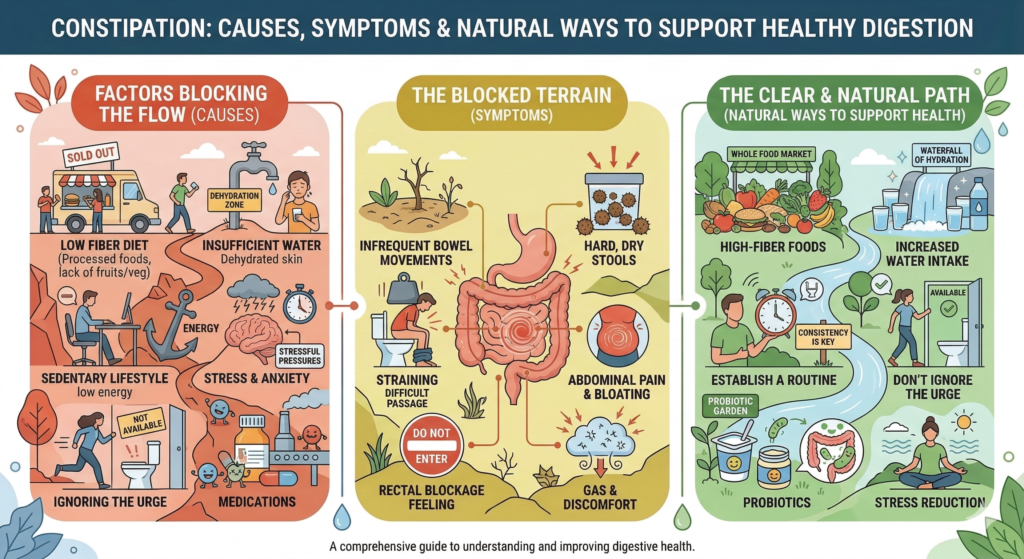
Several things can lead to constipation, such as:
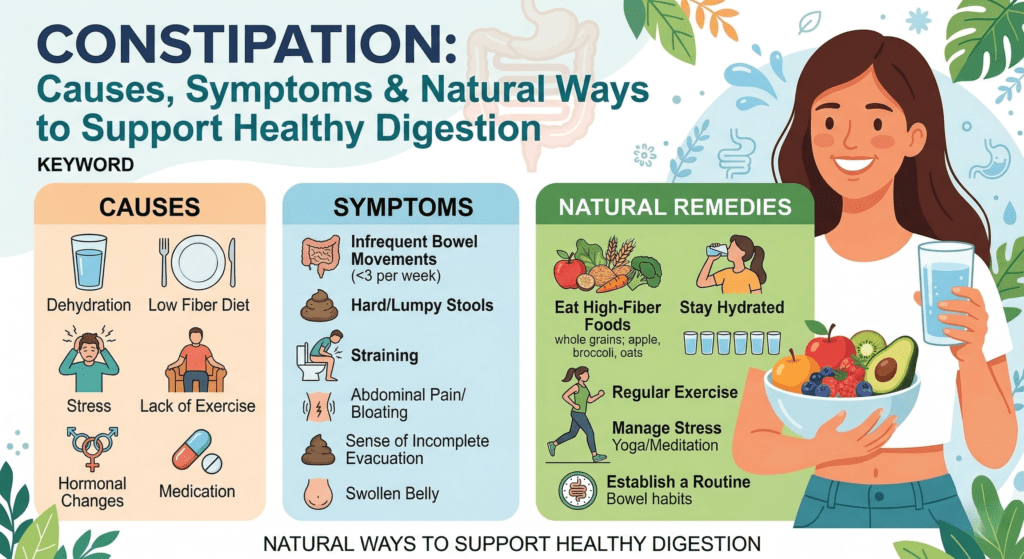
– Not eating enough fiber
– Not drinking enough water
– Being inactive or having a sedentary lifestyle
– Ignoring the body’s signal to go to the bathroom
– Making sudden changes to the diet
A diet that is low in fruits, vegetables, and whole grains can slow down digestion.
Not drinking enough water can also be a major cause, as it makes stools dry and hard to pass.
Signs and Symptoms
Constipation can show up with the following symptoms:
– Hard or lumpy stools
– Straining during bowel movements
– Feeling like the bowel movement isn’t complete
– Abdominal pain or discomfort
– Bloating
If constipation lasts a long time, it can lead to a loss of appetite and ongoing digestive discomfort.
Recognizing these signs early can help prevent more serious problems.
Potential Complications
If constipation is not managed properly, it may lead to conditions like hemorrhoids, anal fissures, or abdominal pain.
In some cases, long-term irregular bowel movements could affect how the body absorbs nutrients and negatively impact overall digestive health. If symptoms are frequent or severe, it is best to seek advice from a healthcare professional.
Natural Strategies to Support Regular Bowel Movements
To manage constipation effectively, making lifestyle and dietary changes is important.
1. Increase Fiber Intake
Include foods rich in fiber, such as whole grains, fruits, vegetables, and legumes.
Fiber helps make stools bulkier and supports regular bowel movements.
2. Stay Hydrated
Drinking enough water throughout the day helps keep stools soft and easier to pass.
3. Get Regular Physical Activity
Exercising helps stimulate the muscles in the digestive system and encourages the movement of food through the intestines.
4. Establish a Routine
Keeping a consistent schedule for meals and bathroom visits can help regulate digestion.
5. Use Research-Based Nutraceutical Support
Some plant-based fibers and ingredients that support digestion can help maintain regular bowel movements when used appropriately.
At Orovita7, our products are made using ingredients that have been scientifically proven to help with digestion and gut health.
We are committed to offering safe and effective wellness solutions.
Orovita7’s Commitment
We follow the that framework to ensure our health information is trustworthy and accurate:
– Understanding real-life digestive challenges
– Based on scientific nutritional research
– Providing accurate and clear information
– Making responsible and reliable wellness recommendations
Our goal is to help people understand that and encourage long-term digestive health habits.
FAQ's
1. What causes constipation?
Constipation is often caused by low fiber intake, not enough water, and a lack of physical activity.
2. How can it be relieved naturally?
Increasing fiber, drinking more water, and staying active can help relieves it.

3. Is constipation serious?
Occasional it is common, but if symptoms are frequent or severe, it’s important to see a healthcare provider.
4. Can stress affect bowel movement?
Yes, stress can slow down digestion and lead to it.
5. Do supplements help with constipation?
Some fiber supplements that are backed by research may help support regular bowel movements when used with healthy habits.